
Thulci Aluwihare, the Deputy Managing Director, CHEC Port City Colombo, struck a note of optimism for the future to the project to attract new investors from India and the Middle East under the changing dynamics of global economics and policies. Excerpts:
Q. What is the current status of Colombo Port City?
Port City is a long-term project. Given the magnitude of the project and the profile of the investors we are trying to attract, country confidence should rank the highest.
Even when you do financial feasibilities in isolation, although numbers will stack up for a particular project, they look at the country situation. Since 2019 until the middle of last year, we had a lot of challenges as a country. We are on an IMF programme, but we are feeling a renewed interest since the second half of last year.
The reason is that our macroeconomic indicators are doing great. There is some confidence built up in the country. I am not still saying we are all out of the woods and all good. I think, directionally, all the numbers are fine as long as we stay on course in terms of fiscal discipline. As far as interest is concerned, I am sure that is not only for the Port City but for a few other investments.
Q. It means the Port City is back on track?
It was always on track. But we can say that the Port City is back on track after the economic crisis. It had a bit of a lull period.
Q You have mentioned elsewhere that US$2 billion worth of investments have been secured. Are those finalized or in the pipeline?
These are US$2 billion investments — US$2.1 billion exactly. That is for land plus buildings for 15 lots. We have 74 marketable lots.
Of the 74 marketable lots, we have secured 15 lots. Land and building investment is US$2.1 billion. Of those 15, some have already been leased. That means financial closure has been done.
For some, there is a binding agreement signed with the initial down payment. So, these are not potential ones. These are signed. These signed or binding agreements with advance payments mean US$2.1 billion for 15 plots.
If anybody who has made an advance and signed a binding agreement pulls out, they will lose that advance. Very rarely will that happen because it is a substantial amount. So, that is why we can very confidently say US$2.1 billion has been secured.
This investment will not come on day one. Generally, all of these will span over a period of time.
Today, let’s say US$2 billion will come in the next three years. You can even say three to four because it is a construction period. You can roughly say 25 per cent each year as of today.
Q. Recently, you mentioned in an interview with the Indian media that Indian and U.S. companies based in India can come and invest here. What is the economic logic for them to come here?
At the moment, for all the companies in the West — European and American — India is the hub for global capability centres (GCCs). Essentially, India is the capital of GCCs. They provide captive services like back-office operations, software development and services dedicated to these large companies in the West.
It can be insurance, banking or whatever. We feel Sri Lanka will have an opportunity to complement that Indian story.
For example, an insurance company has its back office only in India. Especially with the current geopolitical situation, they want to diversify their risk. They want to ensure business continuity. They want to ensure there is disaster recovery. We feel we can cater to that as an alternate location for business continuity.
That’s number one. Two is, also there are certain services that we can plug in.
When India has to provide as a GCC, let’s assume HR, finance, software development, receivable collections, those are also the gamut of things we can do as a GCC. We are good at accounting and finance. After the UK, we have the largest pool of graduates.
In that sense, when they have 10 items on the menu, probably we might be able to cater to one or two to complement that due to our positioning in close proximity, cost competitiveness and access to talent.
And INR is an acceptable currency within the Port City. You get a five-year visa for Indians. So, it’s like if you have an operation in Chennai — one-hour flight away — you can have another office in Port City. You can deploy Indian staff and pay them in INR.
Q. What is the response so far you have got?
The only thing is that Indians also take time in their decision-making. Finally, that decision is by the principals, not the Indian GCC. Final approval has to come from the principals — we are also locating to Colombo Port City.
A great example is IFS, the Swedish company. When they want to expand, they got approval to expand to the Port City.
That is why we have IGT-1 as a sister company. It’s a sister company of IFS, a very large company. They have got two buildings here.
Similarly, Indian companies will look at it. At the moment, we are having some advanced discussions; they will take time.
Q. There are some geopolitical concerns because this is a Chinese investment amid tensions. Will it stand in the way of attracting investment?
I think there is a misconception about what Port City is.
We want to clearly address the facts. A Chinese company or the project company is the developer, but the project is owned by the Government of Sri Lanka. The licence to do business is issued by the Port City Economic Commission on behalf of the Government of Sri Lanka.
We felt that when we were talking to potential companies in India, some of them did not know the real situation. So, we have appointed a dedicated public relations (PR) firm to take these actual facts [to them], so that the Indian companies are comfortable. That is why Indians are taking a little bit of time.
Of course, there are some geopolitical headwinds, but we can address that factually by saying this is part of Colombo or the Government of Sri Lanka. This is a transformation project for Sri Lanka, an arrangement between the Chinese developer and the Government. We are very clearly explaining all of that.
That’s number one. Two, I think since the BRICS summit also took place and Chinese President Xi Jinping visited India, that will also help navigate this.
Q. In the Joint Declaration issued after the BRICS summit, they widely agreed to improve strategic economic cooperation. There were talks between Indian Prime Minister Narendra Modi and Chinese President Xi Jinping. You are going by that general statement or do you have some specifics?
Of course, that is symbolic somewhat as well, but the fact that the Chinese President visited India is an indication that India and China will now do more business. It’s a bit too early still. India has also permitted some of the Chinese EV manufacturers to set up in India.
Q. Now there is tension in the Middle East region. There are new security dynamics. In that context, is it possible for the Port City to position itself properly to attract new investments?
Anyway, for us, even before the conflict, the Middle East — the United Arab Emirates (UAE) — was a primary market for us, essentially for real estate development, because they are very familiar with planned city development.
Now, with the situation in the Middle East, not only for real estate, we are seeing more and more interest among companies also to set up in Port City to take advantage of accessing the subcontinent here.
We have close to 250 companies registered to do business. Of that, the highest number has come from the UAE. It is 19 per cent.
Companies are not relocating. They are also setting up here, keeping their toes to see how this [develops]. They are testing and looking for alternatives to de-risk concentration only in the UAE. Definitely, Port City is appealing to them.
That is shown by the number of companies set up from the UAE. We were there a couple of weeks ago. We had a dedicated show in June. At the end of this month, again we are going to Abu Dhabi, Qatar and Oman. It is a key market for us.
Q. There were improvements in regulatory mechanisms. What are the benefits that will ensure for prospective investors?
I think the biggest thing is to give them assurance that things won’t change. I think that has been very clearly said.
Q. With the change of governments?
That’s right. Rules and regulations are very clear now. There is no ambiguity, and there is also an investor protection provision in the Port City law, which says that when you sign an agreement with the terms, that will not change. Then, the investor knows what he signed is there to stay during his investment period.
Q. Is it something hard to convince them in this regard because of past experience in Sri Lanka?
That is the biggest challenge. Predictability of policy is very important — policy consistency.
It has been a challenge before. That’s the advantage of having a Port City law. Overarching this real estate development gives that assurance that you register under the law. These are the terms and conditions when you sign an agreement that cannot be arbitrarily changed or terminated.
The law says that the investors, when they sign an agreement, all of that is included.
Q. When the total potential of the Port City is realized, it will amount to about US$13 billion in investment?
That is a one-off cost. The more impactful is the recurring contribution to GDP. As estimated by PwC, there’s a recurring contribution to GDP of over US$13 billion per annum. Our GDP is US$100 billion.
That report was done about two or three years ago. We are trying to update that. We have got some investment now.
Q. Do you see the need for further reforming of the Port City law?
I think all Economic Zones have evolved. You need to look at where the demand is coming. You need to be dynamic.
You need to be careful of those reforms, as long as those reforms are improvements. I think it will. I think there is essentially, on the financial services side, a lot of potential.
That is because financial services or banks — offshore banks — will only look at Port City if there is a vibrant business ecosystem for them. We are creating that vibrant business ecosystem with export companies setting up, trading companies, and professional companies setting up. Then the banks will come.
Ideally, I think there can be a lot more done on that side. But that will come a bit later. We need to watch and see what the ask is.
Q. Do you believe that Sri Lanka has the biggest comparative advantage in the service sector, rather than in the agriculture or industrial sectors?
We are a net exporter of services. Although we have a current account balance, it’s negative because of the goods. But the net export of services is otherwise.
What is lacking for us is, even in services, that still traditional services are provided by us.
The idea within Port City is to plug in the modern services, which includes IT, IT-enabled services, professional services and financial services. If you map the growth of modern services in Sri Lanka in the last decades, it’s growing in double digits.
That’s where I think there’s a lot of potential, essentially because of the Sri Lankan talent.
Within Port City, what we also need to do is to export talent. To do that, we need to retain talent. So, while creating an ecosystem for foreign companies to set up in Port City, remunerating those in foreign currency, we are hoping some of this talent will remain.
Q. What is the procedure for getting investment projects approved in Sri Lanka, and how long does the process normally take? One of the biggest concerns is that obtaining approvals for investment projects can take a considerable amount of time, with investors having to deal with many different institutions. Sri Lanka also ranks relatively low on ease of doing business. Does this hamper your work as well?
Definitely. Our FDI (Foreign Direct Investment) numbers show that historically.When the Port City law was developed, there was a dedicated effort to address all the inherent ease-of-doing-business issues in Sri Lanka. One of those was, of course, approvals. There’s a single-window approval as the Commission. It’s actually a single window.
I must say that the Port City Economic Commission has a single-window system that is working. Now, when we look at that, company registrations and approvals can generally be obtained within four weeks. Tax holidays, of course, have to go to the Cabinet, which might take another two to four weeks from there.
And they must also say that the Secretary to the Treasury meets all the authorised persons (APs). We select a certain pool of APs once a month, together with the Port City Economic Commission, to get their feedback. So, he dedicates time once a month to meet them.
Q. Once a month or once in two months?
Once a month. It is a monthly meeting with around 25 to 30 people to ask, you know, how can we improve the service?
Q. Are you experiencing any delays?
So, with these 250 companies, we have close to 10,000 staff. Of those 10,000, more than half are foreigners.
Visas have been issued in a very fast-tracked way.
Q. What is the status of this proposed investment of an international hospital, an international school and a university?
A school, hospital and a university are three. The Government wants to float an RFP for that.
I understand that they have also appointed an evaluation committee. They’ve been told by the Commission to do so before the end of next month. They will float an RFP.
Before floating the RFP, also there are people who are interested. They have submitted EoIs to the Commission. There is interest.
Q. Are you looking at the markets in the ASEAN region?
We are looking at Singapore, Malaysia and Indonesia very closely, including Bangladesh also. We feel that once Sri Lanka joins the Regional Comprehensive Economic Partnership, which we have applied to join as a member — the largest trading bloc in the world — it will be useful.
We have an FTA with India. We feel that this can be a bridge for Indians through us in the FTA to have access to the RCEP trading bloc.
Unfortunately, we missed becoming a member of ASEAN a long time ago. I understand that we tried to apply again and that was unsuccessful. But RCEP, that option is open.
I think it’s definitely a massive advantage if we can have that access because we are the only country also having an FTA with Pakistan.
I don’t think we have utilised it to its full potential.
Q. Pakistani companies are also interested in looking?
We are speaking to a few, especially Pakistani companies which, before using Dubai as a route for their trading, are looking at floating now via Karachi. It is also a potential area because of goodwill.
We are on the line in South Asia. So even Bangladesh, Pakistan, I think those are countries that we need to closely look at.
Now that the country situation has improved, we are planning a dedicated roadshow in Bangladesh as well.
So, having one in India next month in January with the High Commission.
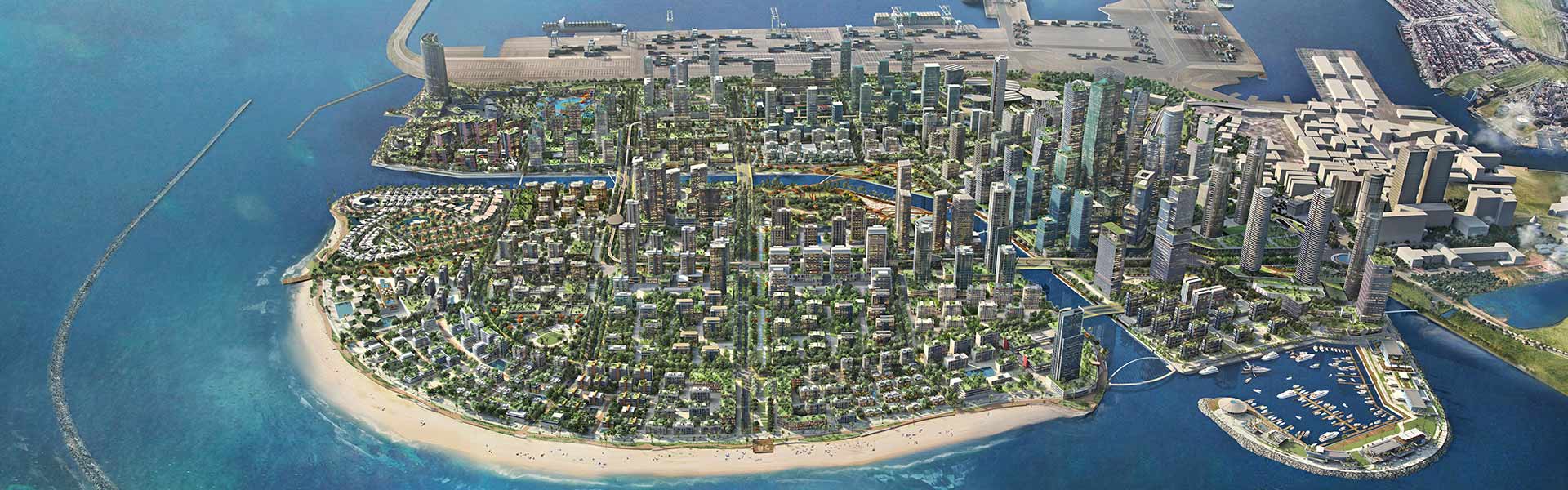
Q. Now, out of these 269 hectares of land, a certain portion is held by the Chinese partner. What about those land lots?
The landmass of 269 hectares is annexed to Colombo. Ownership is with the Government of Sri Lanka.
With the Presidential Order, it is now vested with the Port City Economic Commission. The landlord is the Port City Economic Commission.
The Chinese project company, which I represent, made the investment to do this — US$1.4 billion up to date. To recover the investment, 43% of the 269 — 116 hectares — have been given to the Chinese company.
You can call it a master lease to monetise it. When we identify an investor, we don’t lease land. We don’t have the right to lease. The landowner is the Government of Sri Lanka or the Port City Economic Commission.
So, the security that we have got in return for the investment, we surrender with the need for release. All the leases that have been signed so far are directly between the investor and the landowner. The whole title is with the Government of Sri Lanka.
So, that’s the commercial arrangement. Otherwise, it is a misconception. Absolutely.
So, we explained to the Indian [investors]. I said, if you want to buy a piece of land, of course, we are marketing it because the only way we can recover the US$1.4 billion is when investments come in. But you are not getting a lease from us. You are getting a lease from the landowner, which is the Government of Sri Lanka.
The only thing is that consideration for those lands comes to us. In addition to that, the Government also has 62 hectares of marketable land.
I told you, of the 269 hectares, 43% is given to us, while 57% is with the Government. Of that, 50% — 91 hectares — is public area: roads, beaches and parks.
The Government also has 62 hectares of marketable land. At today’s value, although the Government did not put any money into it, this is a pure investment from the private sector.
At today’s value, those 62 hectares are worth about US$2.5 billion. It is unencumbered land. So, the Government has, within the Port City, land for [forts], RIT, schools, universities and hospitals.
That’s an investment that the Government will get.
Source:Read More.
