
- Home
- Rising Perspectives
- The Rise of Sri Lanka as a Luxury Hospitality Destination in South Asia
Sri Lanka has long captured the imagination of global travellers, and now, it’s capturing their attention at the luxury end of the market.
Scroll through travel platforms today and Sri Lanka appears in vivid colour: golden beaches along the southern coast, misty tea estates carpeting the hills, elephants at dusk in Udawalawe, a tuk-tuk winding through ancient Galle Fort. The island’s extraordinary diversity of landscape and experience has made it a favourite of the adventure traveller, the backpacker, and the slow traveller alike.
But Sri Lanka has long been home to another kind of journey; quieter, more considered, and refined. From the colonial grandeur of heritage hotels to intimate boutique retreats perched above the Indian Ocean, the country’s luxury hospitality tradition stretches back decades. What is changing now is the scale of ambition around it.
As global luxury travel shifts and South Asia’s affluent traveller class grows, Sri Lanka finds itself at an inflection point: a destination with the depth of experience to attract high-value visitors, and an evolving infrastructure ecosystem to retain them.
Sri Lanka’s tourism recovery has been one of the most closely watched in the region. The country attracted 2.36 million tourists in 2025, surpassing the previous peak of 2.33 million recorded in 2018; a remarkable milestone given the successive disruptions the country has navigated over the past several years.
Sri Lanka’s global travel profile continues to rise, with recognition from Condé Nast Traveller, Travel + Leisure, and Lonely Planet reinforcing its standing among discerning international audiences.
But the more compelling story lies in quality. Sri Lanka earned USD 3.22 billion in tourism revenue in 2025 – a modest growth relative to arrival volumes, reflecting an industry-wide recognition that attracting more visitors is only half the equation. The other half is ensuring those visitors spend more, stay longer, and engage with the full breadth of what Sri Lanka has to offer. That recognition is shaping how the tourism and hospitality industry in Sri Lanka is evolving, and where the greatest opportunities for investment in Sri Lanka lie.
Few events in recent memory illustrated Sri Lanka’s high-end tourism potential as clearly as the ICC Men’s T20 World Cup 2026.
When the India-Pakistan fixture was confirmed for R. Premadasa Stadium in Colombo, the response was immediate and telling. Travel demand soared sharply after the match confirmation, with return economy fares from Mumbai and Delhi spiking significantly. Premium packages combining hotel stays and match tickets attracted considerable interest from high-spending visitors from across South Asia, particularly India.
Colombo and Kandy reported full hotel occupancy during match days, with demand extending to Mount Lavinia and Negombo. Visitors during the tournament period recorded longer stays than seasonal averages, with higher per-guest spending across accommodation, transport, and leisure.
What the World Cup demonstrated is that Sri Lanka already has the ingredients to attract South Asia’s wealthiest travellers. Cricket, for this part of the world, is not merely sport – it is a driver of premium travel at scale. The Sri Lanka Convention Bureau leveraged this global spotlight to position Sri Lanka as a competitive MICE destination in South Asia, with several high-profile conferences already in the pipeline as a direct result.
But opportunity alone is not enough: attracting high-value travellers is only part of the equation; what matters equally is how destinations meet their expectations and encourage them to stay longer.
The tournament offered a preview. The opportunity now is to build the permanent infrastructure that makes that preview the everyday reality.

The term “high-value tourism” is often used loosely, but in practice it refers to a specific set of traveller profiles, each characterised by higher spend, longer stays, and a preference for experiences that justify premium pricing.
HNWIs, with wealth of between $5 million and $30 million, form a core group of high-end hospitality consumers, particularly active in Asia, North America, and the Middle East. Ultra-HNWIs (those with more than $30 million in net worth) centre their travel preferences on privacy, personalisation, and rare experiences.
A Marriott study of HNW travellers across Asia-Pacific found that 90% cited wellness offerings as a key factor in booking decisions, and gastronomy remains the leading travel motivation, with travellers seeking immersive, story-driven culinary experiences.
Sri Lanka speaks naturally to all of these motivations. Its Ayurvedic wellness heritage, its cuisine (recognised by establishments like Ministry of Crab and Smoke & Bitters on global restaurant lists), its extraordinary natural settings, and its cultural depth make it a compelling proposition for the world’s most discerning travellers. What is evolving is the supporting infrastructure that translates that proposition into a full-spectrum luxury travel in Sri Lanka experience.
The high-value traveller is not simply looking for a beautiful hotel. They are looking for an ecosystem – one where accommodation, gastronomy, wellness, leisure, and connectivity converge seamlessly.
Several factors combine to make Sri Lanka a particularly compelling proposition for tourism investment in Sri Lanka.
Simplified access: Sri Lanka’s free Electronic Travel Authorisation for Indian, European, Russian, and several other high-growth source markets removes a traditional friction point, making the decision to visit considerably easier.
Extraordinary diversity in a compact geography: A traveller can move from a Colombo waterfront hotel to a hill-country tea estate to the whale-watching grounds off Mirissa within a single itinerary, a density of experience that few island destinations can match.
Favourable exchange dynamics: Sri Lanka offers high-end tourism experiences at price points that remain competitive relative to comparable destinations across Asia and the Indian Ocean, without compromising on quality.
Proximity to India’s growing HNW market: The India outbound tourism market is valued at USD 23.4 billion in 2026 and is projected to reach USD 68.8 billion by 2036, expanding at an 11.4% CAGR. Sri Lanka sits just 35 kilometres off India’s southern coast — a two-hour flight from Mumbai or Chennai, making it uniquely viable as a long-weekend luxury destination in Asia for India’s rapidly expanding affluent class.
A mature luxury hospitality tradition: Sri Lanka’s hospitality heritage is deep. Properties like Amangalla in Galle Fort, Cape Weligama, and a growing portfolio of boutique heritage hotels represent decades of refinement; a foundation that newer developments are building upon, not replacing.
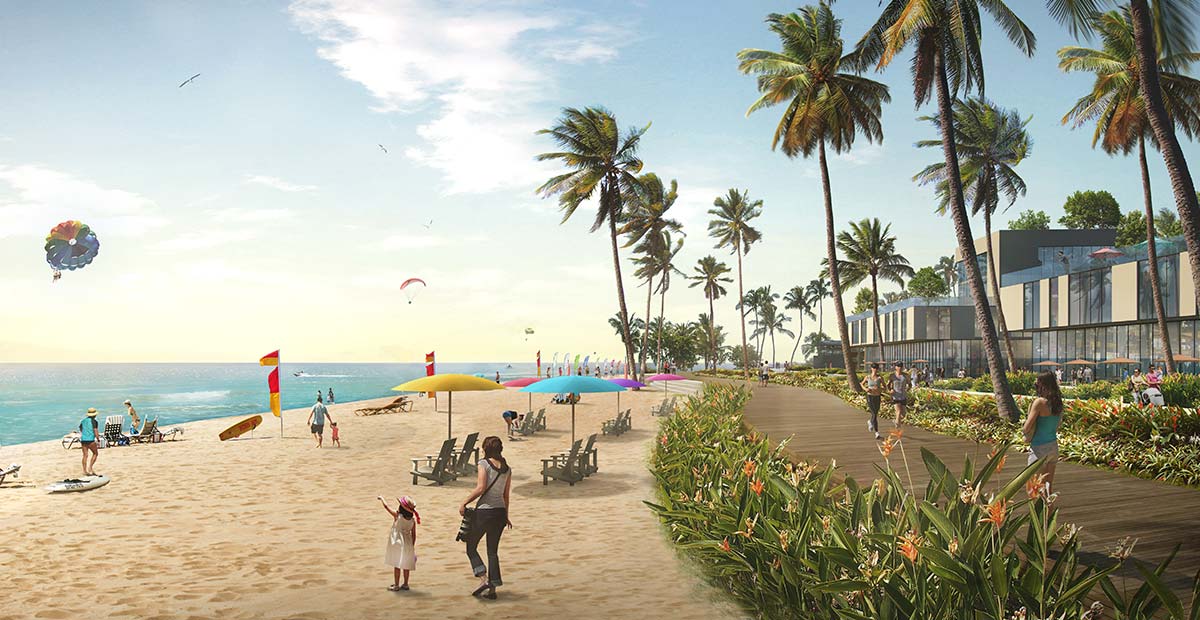
One of the most significant shifts in Sri Lanka’s luxury hospitality landscape is the growing role of Colombo itself, not just as a gateway, but as a destination in its own right.
For decades, Colombo has been a city people pass through, not one they stay in. Visitors would arrive and quickly disperse to the island’s leisure destinations, such as the beaches of the south, the wildlife reserves of the dry zone, the cool hill stations of the interior. The city’s contribution to overall visitor spend and room nights has traditionally been limited relative to its potential as the country’s capital. That is changing.
Port City Colombo is one of the developments driving this change. A master-planned waterfront city spanning over 6.4 million square metres, bringing together luxury hospitality, premium retail, business infrastructure, and world-class lifestyle experiences on Colombo’s oceanfront. As Sri Lanka’s largest foreign direct investment initiative and its first multi-service Special Economic Zone, it is introducing a multitude of offerings that gives high-value visitors a compelling reason to spend more time, and more, in the city.
The infrastructure spans the full spectrum of what today’s high-value traveller seeks:
Maritime leisure and waterfront living. The Marina District features South Asia’s first luxury yacht marina, opening Sri Lanka’s Indian Ocean position to a category of UHNWI traveller – the private sailing and superyacht community – that the island has not previously been able to host at this level. Complementing this, the Island Living District introduces oceanfront villas and a five-star beach resort to Colombo’s waterfront, bringing premium coastal hospitality to the heart of the city.
Retail and lifestyle. The Mall at Port City Colombo brings an operational duty-free retail experience to Colombo, a meaningful addition for international visitors accustomed to world-class shopping as part of the luxury travel experience, and a driver of extended stays in the city.
Business tourism and MICE. A state-of-the-art convention centre positions Colombo to host the regional conferences, corporate incentive programmes, and international business events that represent some of the highest per-day travel spend of any visitor segment. Each event brings a cohort of delegates who, once in the city, have good reason to extend their stay and explore the island.
Medical tourism. Sri Lanka has long been home to internationally trained medical professionals and reputable healthcare institutions. Port City Colombo’s international hospital development builds on this existing expertise, creating a platform for medical tourism, a high-yield segment in which the island has significant latent potential given its competitive cost profile relative to comparable destinations.
Education. An internationally accredited school and university within Port City Colombo will serve both the resident community and the growing segment of regional families who travel to, and ultimately relocate for, world-class education. For South Asian HNW families in particular, educational infrastructure is a meaningful factor in long-stay and investment decisions.
Real estate investment. Developments such as Bay One Residences introduce a new category of premium waterfront living to Colombo, creating real estate investment in Sri Lanka opportunities within a Special Economic Zone framework, with the lifestyle and connectivity that high-net-worth buyers expect.
Together, these elements address a structural gap in the current situation of the tourism industry in Sri Lanka: the limited time and spend that visitors have historically contributed while in Colombo. Every additional night a high-value traveller spends in the city is a multiplier across the broader hospitality ecosystem – for the restaurants, the retailers, the cultural venues, and the wider service economy that surrounds them.
Sri Lanka has already begun to resonate with discerning travellers and with investors who recognise the convergence of strong fundamentals, growing demand, and maturing infrastructure.
For those exploring business investment opportunities in Sri Lanka, the tourism investment in Sri Lanka landscape offers a clear entry point. The island’s appeal to high-value travellers is established and growing. The infrastructure to deepen that appeal, and to translate rising visitor numbers into meaningful per-visitor yield, is now being built.
Port City Colombo’s luxury and lifestyle developments represent a direct opportunity within that landscape: investments in Sri Lanka in hospitality, real estate, and lifestyle infrastructure, within the country’s most dynamic urban growth precinct, backed by the regulatory framework of a Special Economic Zone.
Visit our Investor Relations page or contact us to learn more about investment opportunities in Sri Lanka and Port City Colombo’s role in shaping the future of luxury hospitality in South Asia.

What are the current trends in Sri Lanka’s hospitality sector?
Sri Lanka’s tourism and hospitality industry is evolving on two parallel tracks. The first is the continued growth of destination-based luxury – boutique heritage properties, wellness retreats, and experiential travel across the island’s extraordinary natural and cultural landscape. The second is the emergence of urban luxury in Colombo, driven by integrated lifestyle developments like Port City Colombo that are introducing waterfront living, marina infrastructure, premium retail, and MICE facilities to the city. Both trends are aligned with the global shift toward high-value, experience-led travel among HNW and UHNW visitors.
Why is Sri Lanka an attractive destination for luxury investment?
Sri Lanka combines a mature luxury hospitality tradition, geographic proximity to India’s rapidly growing HNW outbound market, simplified visa access, favourable foreign exchange dynamics, and an extraordinary diversity of experience within a compact geography. The emergence of Port City Colombo as an integrated urban lifestyle development adds a world-class waterfront dimension to the real estate investment in Sri Lanka landscape, within the country’s first multi-service Special Economic Zone.
How is Port City Colombo contributing to luxury tourism in Sri Lanka?
Port City Colombo is introducing infrastructure that Sri Lanka’s high-end tourism ecosystem has not previously had at scale: South Asia’s first luxury yacht marina, oceanfront residential and resort developments, duty-free retail, convention facilities, medical tourism infrastructure, and internationally accredited education, all within a master-planned waterfront city. These developments extend the time and quality of engagement that high-value visitors have with Colombo, complementing the island’s existing portfolio of luxury destinations in Asia rather than replacing them.
